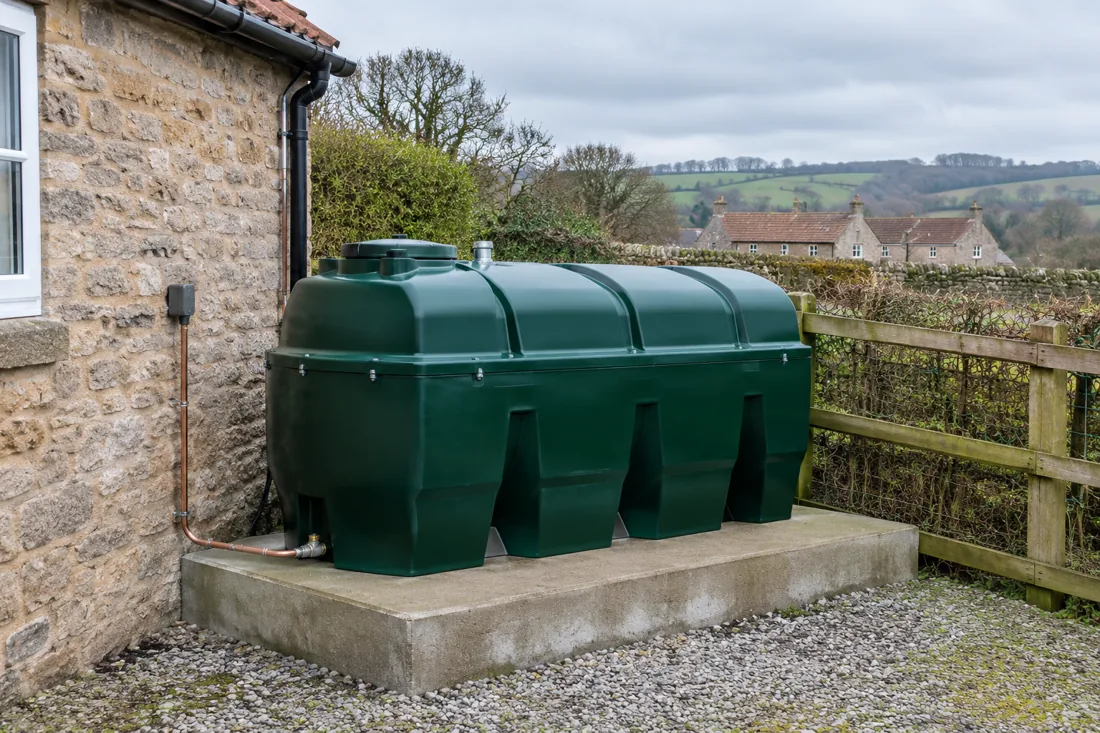
Is Replacement The Right Decision?
Cracking, distortion, severe rust, damaged supports or a poor position are reasons to arrange an assessment. They do not all lead to the same solution. A sound tank with contaminated fuel may need cleaning, while a failed shell needs a different approach.
Our replacement enquiries cover domestic heating oil stores, rural properties and commercial installations. Tell us why you are considering a change, including any delivery refusal, inspection finding or building alteration. That starting point helps distinguish urgent condition issues from a planned upgrade.
Choose Capacity And Shape Together
Use your actual oil consumption and delivery pattern when discussing capacity. A larger tank needs more space and support, and may create different containment requirements. A narrow tank may pass a gate yet still need room for inspection and filling once installed.
Compare plastic and steel options against the location and intended use. Ask for the proposed model, dimensions, usable storage and warranty terms in writing. The outer dimensions of a bunded tank matter when planning the base and access, rather than just the size of its inner vessel.
Reassess The Existing Position
Replacing like for like should not mean overlooking changes around the tank. An extension, new fence, drainage alteration or vehicle route can affect suitability. The installer needs to consider fire exposure, containment, delivery access and a practical way to inspect the new installation.
GOV.UK confirms that new and replacement domestic tanks in England must meet Building Regulations. Agree how compliance will be handled before work begins. A competent person scheme and the separate building control route are alternatives to discuss with the installer.
Check The Base Before Ordering
An existing slab is not automatically suitable because it supported the previous tank. The replacement may distribute its weight differently or require a larger footprint. Settlement, broken slabs, uneven support and water collecting around the base all deserve attention.
Ask whether base assessment, construction and any curing time are included in the programme. On an exposed plot, consider the surrounding ground and runoff as well as the slab. A replacement date should allow for the base to be ready before the new tank is loaded.
Plan Oil Recovery And Heating Downtime
The remaining oil needs somewhere suitable to go during changeover. Its condition determines whether transfer is sensible. Tell us about recent contamination, unexplained fuel loss or repeated filter blockage so the proposal does not assume that all existing contents can be reused.
The heating or supplied equipment will need a controlled interruption. Ask whether temporary storage or a temporary supply is feasible if the job extends beyond a straightforward changeover. It is an extra arrangement to confirm, with its own siting, connections and cost, rather than a guaranteed part of every replacement.
Understand The Cost And Handover
Price depends on the new tank specification, old-tank removal, recovered contents, base works, pipework and access. A quotation should identify whether fill arrangements, isolation components and reconnecting the existing system are covered. Ask how unexpected damage discovered after removal will be dealt with.
At completion, request the tank and warranty information, installation and commissioning record, relevant compliance documentation and appropriate waste records. Confirm who will demonstrate normal operation and explain inspection needs. These documents serve different purposes, so a single disposal receipt does not replace an installation record.
Prepare Your Replacement Enquiry
Send your postcode, current tank capacity if known, and pictures of all visible sides, the supports and connections. Add a wide view of nearby buildings and boundaries. A photograph down the access route is as useful as a close-up of the tank label.
For farms and commercial premises, state the fuel and what it supplies. Domestic heating, agricultural fuel and other business storage may follow different requirements. Include any shutdown limits and proposed delivery dates, but avoid booking a refill into a tank whose condition is in doubt.
Oil Tank Replacement Questions
Can I Keep The Same Oil During Replacement?
Oil tank replacement may allow usable oil to be recovered and transferred into suitable storage. Water, sludge or degraded fuel can make some or all of the contents unsuitable. Ask for the assessment and transfer arrangement to be included in the quotation, along with the route for any material that cannot be reused.
Will A Replacement Tank Fit The Old Base?
A replacement tank needs support suited to its own dimensions and manufacturer requirements. Even a tank with a similar capacity may have a different footprint. The base needs assessment before reuse, and any rebuild should be agreed before delivery so installation is not held up by unsuitable or unfinished support.