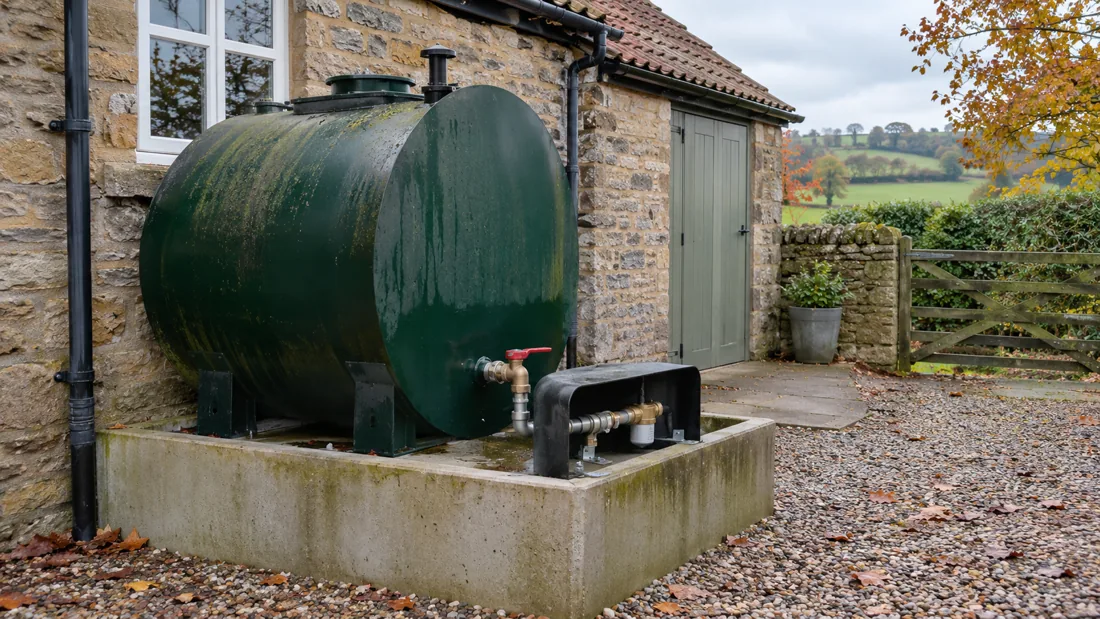
If Oil Is Escaping Now
Keep people and animals away from the affected area. Avoid ignition sources and do not wash oil into the ground or drainage. Do not attempt to patch, cut or move a leaking tank yourself. If there is immediate danger to people, use the emergency services.
Contact your insurer and the Environment Agency through its environmental incident reporting service where oil is reaching or threatening the ground or water. Our enquiry form is not monitored as an emergency reporting channel. Do not wait for a form response before seeking urgent assistance.
Recognise A Suspected Leak
Look for changes that are safely visible: damp staining around the tank, persistent oil odour, damage to the shell or an unexpected fall in fuel level. Loss can originate from a connection or buried supply line as well as the tank body, so the apparent source needs checking.
A wet patch inside a bund is not proof that the surrounding area is unaffected. Rainwater, damaged containment or hidden pipe routes can complicate the picture. Record what you see without walking through oil, lifting covers or disturbing the area.
Record The Evidence For Your Insurer
From a safe position, take photographs of the tank, affected surfaces and nearby drainage. Note when you first noticed the problem, the last delivery date and any recent gauge readings. Include changes in heating performance and any previous inspection advice.
Ask the insurer how it wants investigation and clean-up authorised. Coverage depends on the policy and circumstances, so do not assume every lost litre, tank replacement or ground investigation is included. If you rent the property, notify the landlord or managing agent as well as reporting the immediate concern.
Containment And Fuel Recovery
A specialist response first assesses the source and the risk of further escape. Remaining fuel may need pumping into suitable temporary storage, with contaminated material kept separate. The amount left, condition of the tank and safe vehicle position influence the equipment and approach.
Recovered fuel is not automatically suitable for reuse. Ask how its condition will be judged and what happens to rejected contents. Any temporary tank needs a suitable position and safe connection arrangements, especially if the heating supply is to remain available during further work.
Decide Between Repair And Replacement
The correct decision depends on the actual defect. A failed plastic tank shell is a replacement issue rather than a reason to rely on a patch. Some pipework or steel components may be repairable after competent assessment, but stopping a visible drip alone does not establish overall condition.
Inspect the support and containment as part of the decision. If the base has moved or the tank sits in a poor position, a new shell on the same support may leave the underlying problem unresolved. Our replacement guide explains the wider changeover scope.
Assess Where The Escaped Oil Went
Oil can travel beyond the first visible stain. An environmental assessment may be needed to establish effects on soil, drains or water and to plan the clean-up. North Yorkshire Council's spill guidance explains the local reporting and property responsibilities.
Removing contaminated soil is not a routine garden clearance. Sampling, waste classification, access and the receiving facility influence the work. The specialist should explain what evidence supports the proposed extent of excavation and any checks required before reinstatement.
Costs, Access And Completion Evidence
Leak work can include containment, fuel recovery, temporary storage, investigation, disposal, replacement and reinstatement. These may involve different specialists and approvals. Ask for the urgent actions and follow-on works to be distinguished so you understand what has been authorised and what remains uncertain.
For a follow-up enquiry, send the postcode, safe photographs, approximate fuel level and insurer reference if relevant. Mention water sources and access constraints. Keep dated work reports, appropriate waste documents, sampling findings and replacement records together, rather than treating a tank invoice as proof that all contamination has been resolved.
Leaking Oil Tanks Questions
Is An Oil Smell Always A Tank Leak?
An oil smell can come from a spill, a connection, pipework or the tank itself, and it needs assessment rather than a remote diagnosis. Note when it started and any staining or fuel-level change. If there is a pollution risk or oil odour affecting occupied rooms, seek prompt specialist and official advice.
Can I Book An Emergency Through This Form?
The oil tank enquiry form is for requesting a response and does not provide emergency attendance or a guaranteed response time. If oil is escaping, contact your insurer and the relevant environmental reporting service immediately. Use the form for supporting details or follow-up work once urgent reporting and assistance are underway.