Design The Storage Around Its Use
A new oil tank can serve a rural home, an outbuilding conversion, farm equipment or a commercial heating or standby system. These uses are not interchangeable. Tell us what fuel will be stored, what equipment it supplies and whether this is a completely new system.
Choose capacity using expected consumption, delivery arrangements and available space. Buying a tank first can leave difficult questions about the base, containment or access until too late. Begin with a site assessment and a clear installation scope instead.
Compare Possible Tank Positions
A proposed position needs more than a level patch of ground. Consider nearby openings, combustible structures, boundaries, drains and any well or watercourse. The installer should assess fire and pollution risks and the practical requirements for future inspection and maintenance.
On exposed North Yorkshire plots, explain how rainwater moves across the ground and whether access becomes soft in wet weather. If a tank is being screened with fencing or planting, leave the inspection and delivery requirements in the design rather than treating them as an afterthought.
Understand Bunding And Protection
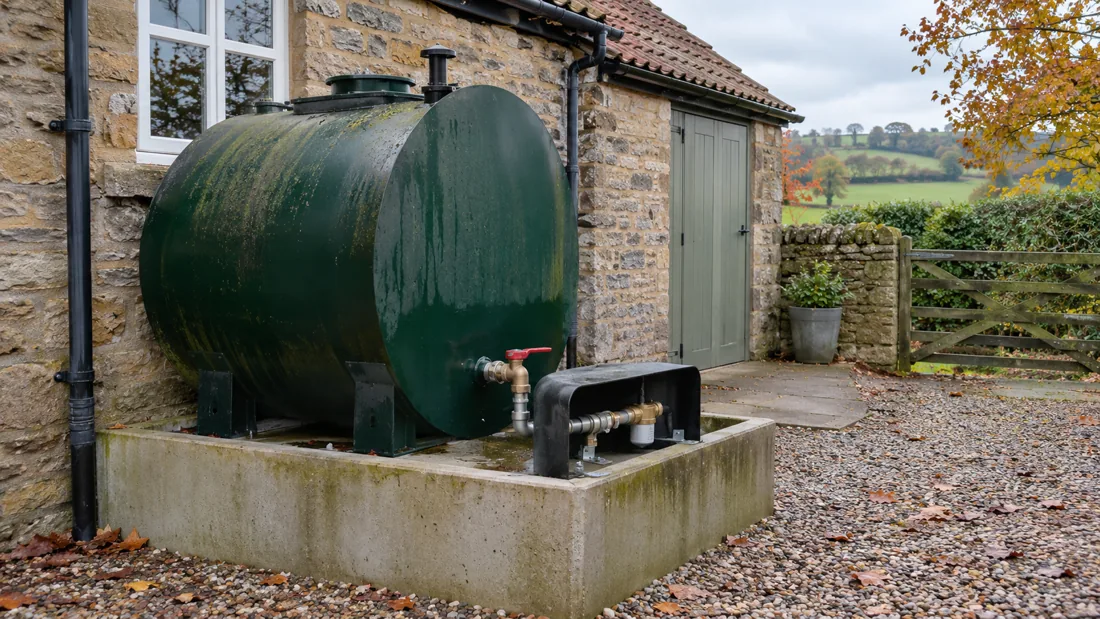
A bund provides secondary containment around stored oil. It is distinct from simply having a second skin for strength. The assessment needs to establish the containment required for the tank's use, capacity and location, alongside protection against accidental impact.
Official domestic guidance identifies drainage, water sources and spill pathways as relevant bunding factors. For business use, check the separate oil storage guidance. Agricultural fuel has its own route, so identify the actual use rather than assuming every farm tank follows the same rules.
Allow For The Whole Installation
The base must suit the specified tank and its loaded weight. Ask who designs and prepares it, how the surrounding surface drains and when it will be ready for installation. An attractive gravel surround is not a substitute for the support the tank manufacturer requires.
The scope also needs pipework, filling and venting arrangements, isolation, and the connection to the supplied equipment. Existing services and buried obstructions can affect the route. Keep the oil delivery supplier's access needs in view so the finished store is practical to fill.
Sequence Delivery And Commissioning
Agree the order of groundworks, tank delivery, connection and initial filling. Restricted gates, low branches and steep or fragile drives can influence handling equipment. Provide measurements where they are safe to take, and identify the property entrance clearly for rural locations.
A new tank may have no old contents to manage, but any connected existing store does. If this is an extension to an oil system, explain the existing fuel and pipework arrangement. Decide how fuel will be introduced and when the system can be commissioned before booking deliveries.
Costs, Compliance And Records
Tank material, capacity, containment, ground preparation and pipe runs shape the cost. A remote position may need a more involved filling arrangement. Ask whether the quotation includes commissioning, any old equipment removal and making good surfaces disturbed by the new installation.
For a domestic project in England, arrange the applicable Building Regulations compliance route with the installer. Retain manufacturer instructions, warranty terms, commissioning results and the relevant completion documents. Planning or listed-building constraints may need separate advice, particularly where new groundwork changes the setting of an older property.
Information To Send Before A Survey
Send the postcode, property use, intended fuel and preferred capacity if known. Include wide photographs of the proposed location, nearby structures, drainage and the route from the road. Explain whether the base exists, whether electricity or other services cross the area and whether an oil appliance is already installed.
Commercial buyers should add drawings, expected demand, delivery arrangements and site operating restrictions. A farm enquiry should distinguish heating for the farmhouse from fuel for agricultural operations. If you already have a failed tank, our replacement guide covers the additional changeover work.
Oil Tank Installation Questions
Should I Buy A Tank Before The Survey?
Oil tank installation is easier to scope when position, access and support have been assessed before purchase. A tank bought only on capacity may not fit the route or meet the needs of the chosen location. Discuss the proposed model with the installer and confirm the full dimensions before placing an order.
Can A New Tank Go Further From The Building?
A new oil tank position can be considered away from the building, but distance alone does not establish suitability. Pipework, filling access, drainage, fire risk and maintenance access all need review. Send photographs of both the proposed position and the route back to the supplied equipment so the whole arrangement can be assessed.