Choose Removal Or Replacement
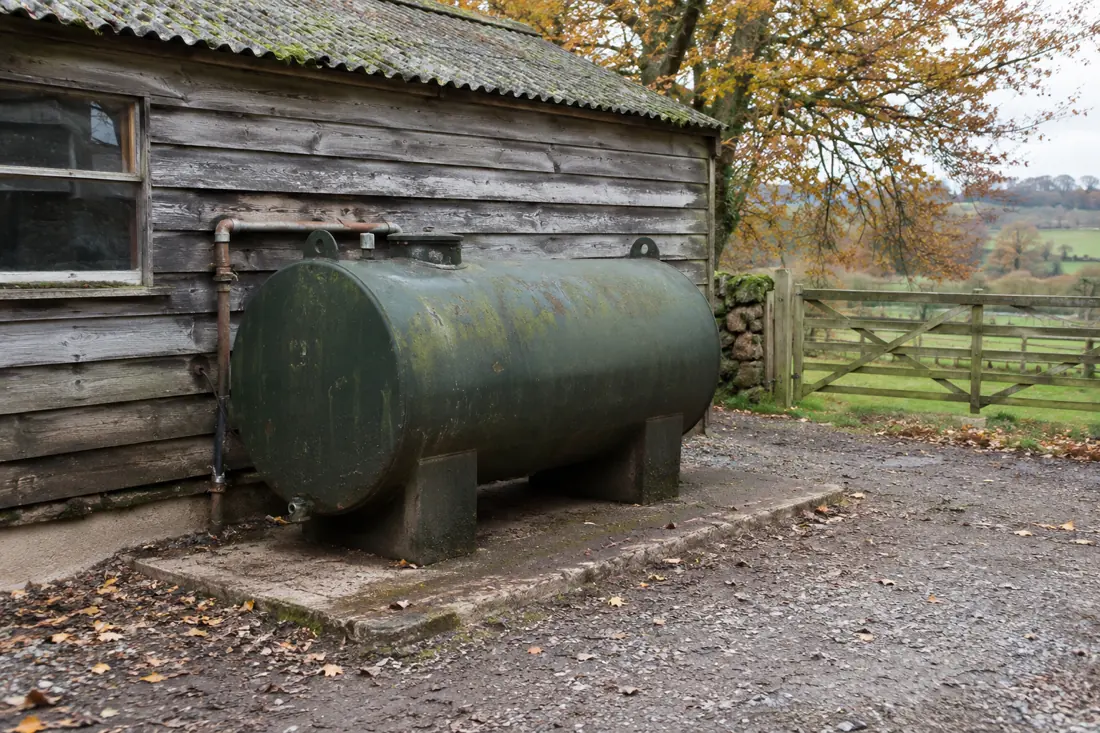
Oil tank removal suits a change of heating system, a redundant store or a tank that has become an obstacle to building work. If you still need oil heating, a coordinated tank replacement usually makes more sense than booking an isolated removal.
Start with the intended outcome. Do you need the tank alone taken away, its base broken out, redundant pipework removed or the ground ready for a builder? Those are different scopes, and an apparently simple clearance can involve several separate tasks.
What Happens Before The Tank Moves
The removal plan starts with the contents and connections. The contractor identifies what the tank supplied, arranges safe isolation, recovers liquid and removes residues before deciding how to lift or section the shell. A gauge reading of empty does not establish that the inside is clean.
Whole-tank removal may suit an open yard. A tank behind an extension or through a narrow passage may need controlled dismantling after preparation. HSE warns that residual liquid in an apparently empty container can create an explosion risk during hot work. Cutting is specialist work.
Decide What Happens To The Fuel
Tell us approximately how much oil remains, when it was last delivered and whether water or sediment has been reported. Usable fuel may be recoverable into suitable storage, subject to condition and the receiving tank. Do not assume it can be poured straight into another system.
If you are leaving oil heating altogether, ask for recovery and disposal to be included explicitly. Contaminated oil, oily water and sludge need an appropriate waste route. Their quantity affects equipment, transport and cost even when the tank itself is small.
Measure The Route, Not Just The Tank
Take photographs from the tank towards the road, showing gates, turns, steps and overhead obstructions. State the narrowest clear opening if you can measure it safely. Explain whether the route crosses a lawn, gravel drive, septic tank area or shared access.
At a rural property, a vehicle may reach the gate but not the tank. Soft ground and limited turning space can change the collection method. For farmyards, identify livestock movements and vehicle working areas so access can be separated from daily activity.
Compare The Quotation
A useful quotation separates tank preparation, fuel handling, dismantling or lifting, waste transport and any reinstatement. Check whether the base and supports are staying. Ask who deals with the old fill point so a later delivery cannot be directed into a redundant connection.
Material, capacity, remaining contents and access drive the price. Basement work, lifting equipment or work alongside occupied buildings can add complexity. If staining or an oil smell suggests a past leak, investigation of the ground should be discussed separately rather than buried in a general clearance price.
Keep An Accurate Removal Record
Agree the handover documents before accepting the work. Ask for a dated description of the tank removed, the treatment of the contents and the waste documentation appropriate to the material and movement. A gas-free certificate relates to particular testing and work, not an automatic document for every removal.
Keep these records with the property file, along with before-and-after photographs. For a commercial site, retain the agreed method statement and any lifting information too. Removal of the shell does not itself certify that surrounding soil is uncontaminated.
Send A Useful Removal Enquiry
Include your postcode, tank material, approximate capacity and whether the heating is still connected. Send a full view, the base, fill and outlet arrangements, and the route out. Photograph only what is safely visible without climbing on the tank or entering an enclosure.
Mention a house sale, building programme or proposed delivery date early. If the tank is buried or partly concealed, use our underground tank guide before choosing a removal method. Tell us about a suspected leak straight away.
Oil Tank Removal Questions
Can A Tank Be Removed Without A Replacement?
Oil tank removal can be arranged on its own when the heating system has changed or storage is no longer needed. The scope still needs to cover remaining fuel, safe disconnection and redundant fill arrangements. Include any base removal or surface repair you want in the enquiry so it can be priced separately.
Does An Empty Tank Still Need Cleaning?
An empty oil tank can retain sludge, liquid in seams and potentially hazardous vapour. A specialist assesses the preparation needed for the chosen removal method, including cleaning and atmospheric checks where appropriate. Do not cut, drill or burn the tank yourself, even if it has stood unused for a long time.